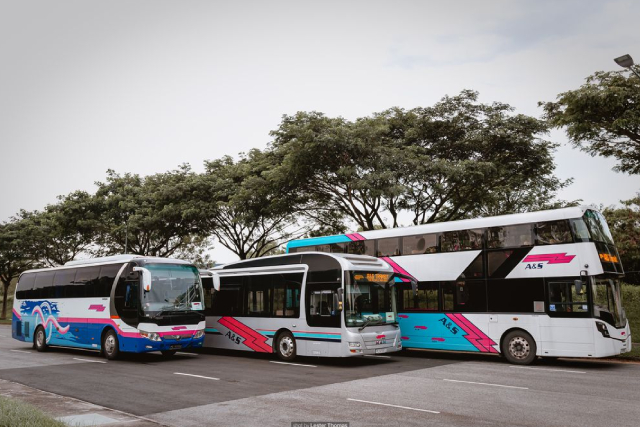
Most business owners think about transport costs the same way they think about electricity bills: a necessary expense to keep the lights on, nothing more. But a staff bus is different. Get it right and it quietly reshapes how your team feels about coming to work, how reliably they show up, and how much energy they have left once they clock in.
This isn’t about luxury or vanity. It’s about recognising that the daily commute is one of the biggest hidden drains on productivity, and that a well-planned bus rental arrangement can turn that drain into a genuine advantage.
Let’s look at where the real returns come from, and why more companies in Singapore are quietly making the switch.
Time saved is money earned
Singapore’s public transport network is solid, but it wasn’t built around your shift patterns or your factory’s location. Employees juggling multiple bus and MRT transfers, especially those working early morning or late night shifts, can easily lose 45 minutes to an hour each way. Multiply that across a team of 50 people and you’re looking at hundreds of lost hours every week, hours that show up as late arrivals, rushed starts, and tired workers.
A dedicated staff bus collapses that time. One pickup point, one drop-off, no transfers. Employees arrive calmer and closer to on time, which sounds small until you tally up the effect over a full year.
Think about what those saved minutes actually mean in practice. An employee who used to leave home at 6am to catch two buses and an MRT connection might now leave at 6.40am and still arrive on time. That’s extra sleep, a proper breakfast, or simply a slower, less stressful start to the day. None of this feels like a business metric, but it directly affects how alert and focused someone is once they’re actually at work.
Attendance and punctuality improve
Lateness is rarely about attitude. More often it’s about unreliable connections, unpredictable weather, or a bus that simply doesn’t show up when the app says it will. Take that unpredictability out of the equation and punctuality tends to follow naturally.
Companies that introduce staff transport often notice fewer last-minute no-shows too, particularly for early or late shifts where public transport options thin out. Safety first is a phrase worth keeping in mind here, since a scheduled bus also means fewer employees walking alone to distant bus stops or waiting at unlit junctions after dark.
It becomes a genuine recruitment and retention tool
Ask any HR manager in manufacturing, logistics, or hospitality what the hardest part of hiring is right now, and transport will come up more often than you’d expect. Roles based in industrial parks or areas with limited MRT coverage struggle to attract candidates who don’t drive.
Offering staff transport changes that conversation. It tells candidates the company has thought about their day beyond the eight hours at the desk or on the floor. For existing employees, it’s one less thing to worry about, which quietly builds loyalty in a way that’s hard to replicate with a one-off bonus.
The financial maths often surprises people
Here’s where the “hidden” part of hidden ROI really shows up. Business owners often assume a bus rental will eat into margins, but when you weigh it against the alternatives, the picture looks different.
| Cost factor | Without staff bus | With staff bus |
| Late arrivals and lost productivity | Higher, especially on rainy days or peak hour disruptions | Reduced, with predictable arrival times |
| Recruitment for hard-to-reach locations | Longer hiring cycles, smaller candidate pool | Wider pool, faster hiring |
| Staff turnover | Higher in roles seen as inconvenient to reach | Lower, transport becomes a retention perk |
| Overtime and shift coverage gaps | More frequent due to no-shows | Fewer gaps, more reliable coverage |
None of these figures are dramatic on their own. Stack them together over a year, though, and the numbers add up quickly, often outweighing the cost of the bus itself.
Team culture gets a quiet boost
There’s a social side to this that’s easy to overlook. A shared ride at the start and end of the day gives colleagues a bit of informal time together, away from deadlines and targets. For newer staff, it’s an easy way to get to know teammates without the pressure of a formal setting. For long-serving employees, it can be one of those small, unremarkable routines that makes a workplace feel familiar.
None of this shows up on a balance sheet, but ask any manager who has introduced staff transport and they’ll usually mention it unprompted. It’s a small addition to the working day, yet it often ends up being one of the things employees mention first when asked what they appreciate about the company.
What to consider before committing
Before jumping into a contract, it helps to think through a few practical questions:
- How many pickup points does your team actually need, and are they close enough together to keep the route efficient?
- Do shift patterns vary enough that you’ll need more than one departure time?
- Is the vehicle size right for your headcount, with room for growth?
- What’s the provider’s track record on punctuality and driver reliability?
- Are contracts flexible enough to scale up or down as your team changes?
Getting these details right from the start avoids the common trap of signing up for a service that looks good on paper but doesn’t quite fit how your team actually moves.
A small shift with a lasting effect
The return on a staff bus rarely shows up as a single dramatic number. It shows up gradually, in fewer late mornings, in candidates who say yes to a role they’d otherwise have turned down, in a workforce that arrives a little less frazzled and leaves a little less exhausted.
For companies weighing up whether the investment makes sense, the honest answer is that it depends on your team’s specific commute challenges, but for many Singapore businesses with staff spread across the island, the benefits tend to outweigh the costs by a comfortable margin.
If you’re exploring options, A&S Transit offers reliable staff transport solutions tailored to different team sizes and shift patterns.